
If you run a business or manage corporate operations in Nigeria, you already understand one hard truth – energy is not just an expense, it is a major operational driver.
Power determines how fast your team works, how reliably you serve customers, and ultimately how profitable your business becomes. You will probably agree with me when I say that when power is unstable, productivity drops, costs increase, and growth slows down. That has been the reality of doing business in Nigeria for years.
Most companies have simply adapted.
They buy generators.
They stock diesel.
They increase maintenance budgets.
But very few businesses actually stop to ask an important question:
Is diesel still the most economical way to power a business in Nigeria today?
Over the past few years, that question has become more important than ever.In conversations with CEOs and operations teams across different industries, we keep hearing the same concern:
“Our diesel cost keeps rising, but we don’t see a practical alternative”
The truth is, many businesses are looking at the problem from the wrong angle. The real issue is not diesel itself.
It is the hidden cost of relying on diesel as your primary power source.
And when you compare that with modern commercial solar solutions, the difference becomes very clear.
The Real Cost of Running Diesel Generators
For years, diesel generators have been the backbone of business operations across Nigeria. From factories and hospitals to warehouses and office complexes, generators have filled the gap left by unstable grid power.
At first glance, diesel seems simple.
You buy a generator.
You buy fuel.
You keep operations running.
But when we work with companies to review their energy systems, we usually find that diesel power is far more expensive than most business owners realize.
Fuel Costs Continue to Rise
Diesel prices in Nigeria have become increasingly volatile.
Businesses that used to budget for diesel monthly now struggle to predict fuel costs even two weeks ahead. For many medium-sized companies, diesel alone now accounts for a significant percentage of operating expenses. We recently reviewed the energy structure of a mid-sized manufacturing business in Ogun State. The company operated two generators to maintain production because grid supply was unreliable.
On average, the company was spending over ₦14 million every month on diesel alone.
And that figure did not include generator servicing, logistics, or downtime. This is the reality many Nigerian businesses are currently facing.
Generator Maintenance Is an Ongoing Expense
Generators are not “install and forget” equipment.
They require constant maintenance.
Oil changes.
Filter replacements.
Parts replacement.
Technician servicing.
As generators age, the maintenance cost increases. Breakdowns become more frequent, and the reliability of the system reduces. For businesses that depend heavily on diesel, this creates a cycle where operational stability depends on machines that are becoming more expensive to maintain every year.
Downtime Is Costlier Than You Think
Many companies focus only on the cost of fuel. But the biggest financial loss often comes from downtime.
When a generator fails unexpectedly or fuel supply is delayed, operations stop.
Meetings get postponed.
Production lines slow down.
Cold storage facilities become vulnerable.
Digital systems go offline.
A warehouse operator in Lagos recently shared how a generator failure during peak operations affected their cold storage system and resulted in damaged inventory. What looked like a power issue quickly turned into a business loss.
Power reliability is no longer just a technical issue. It is a business continuity issue.
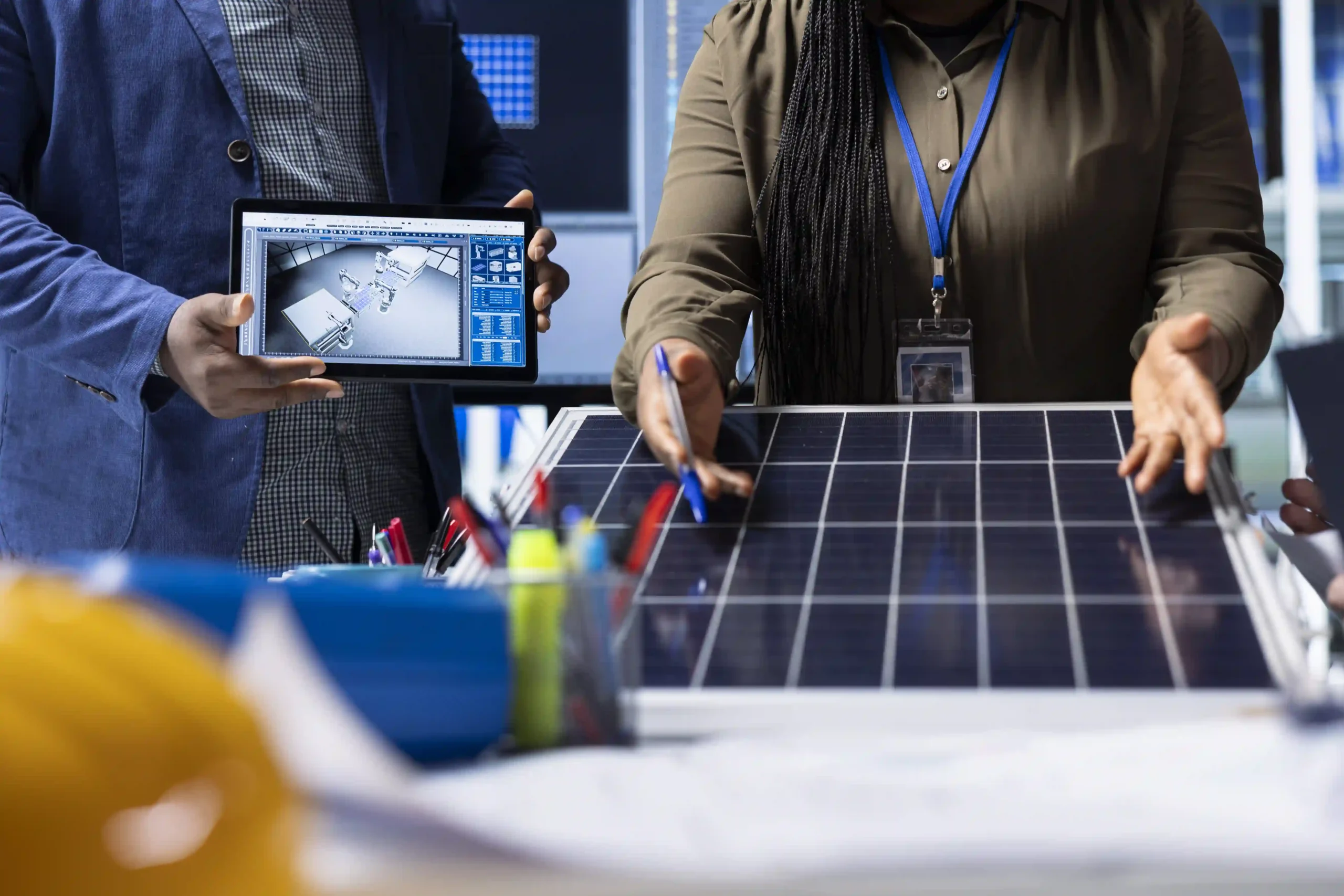
Why Many Businesses Are Switching to Commercial Solar
Over the last few years, commercial solar systems have moved from being an “alternative option” to becoming a strategic energy solution for many companies. But the biggest misunderstanding we encounter is this:
Many business owners believe solar simply replaces diesel. That is not exactly how modern energy systems work.
Today, most businesses operate hybrid systems that combine solar, batteries, and backup generators to create a stable and efficient energy structure. This is where Energymall Enterprise Solutions helps businesses rethink their power infrastructure.
Understanding the Commercial Solar Cost Advantage
When we compare commercial solar vs diesel cost in Nigeria, the difference becomes clear when we look beyond just the installation price.
Solar systems operate differently from generators, generators consume fuel every day.
Solar systems generate electricity from sunlight, meaning once the system is installed, the operational cost becomes significantly lower.
Let’s break it down.
Fuel vs Free Energy Source
Diesel generators rely on fuel every single day.
Solar systems rely on sunlight, which is freely available.
After installation, the primary costs associated with solar are minimal maintenance and occasional system monitoring.
Over time, this dramatically reduces energy expenditure.
Predictable Energy Costs
One of the biggest challenges CEOs face with diesel is cost unpredictability.
Fuel prices fluctuate.
Supply chains fluctuate.
Solar systems change that equation.
Once installed, businesses can forecast energy costs over long periods. This makes financial planning far easier and reduces operational risk.
Long-Term Return on Investment
When companies first explore solar, the initial installation cost often raises concerns.
But when we conduct an energy audit and compare the numbers over several years, the financial benefits become clear. Many commercial solar systems reach return on investment within three to five years, depending on the system size and diesel consumption levels.
After that point, the savings become significant.
A Real Example: Energy Transformation in a Nigerian Factory
One of the projects we recently assessed involved a food processing factory operating in Ibadan. The company relied heavily on diesel generators because their production equipment required stable power.
Monthly diesel expenses averaged ₦16 million, and generator maintenance costs were steadily increasing.
After conducting an energy assessment, our team at Energymall Enterprise recommended a hybrid solar and battery system designed around the factory’s operational load.
The goal was not to eliminate generators completely.
Instead, the system reduced generator dependency while maintaining reliable power supply.
Within the first year of deployment, the factory recorded:
- A major reduction in diesel consumption
- Lower generator maintenance costs
- Improved production stability
Most importantly, the company gained predictable energy spending, which helped management plan operational budgets more effectively.
Beyond Solar: Building Complete Energy Infrastructure
At Energymall Enterprise Solutions, our goal is not just to install solar panels.
We design complete infrastructure solutions that support business operations.
This includes:
Energy Audits and Load Analysis
We study how your business consumes power and identify areas where energy efficiency can improve.
Commercial Solar Installation
Custom solar systems designed around your facility’s energy requirements.
Hybrid Backup Systems
Integrating solar, batteries, and generators to create reliable power structures.
Efficient Lighting Solutions
Upgrading industrial lighting systems to reduce electricity consumption while improving workplace safety.
Security Infrastructure
CCTV and access control systems powered by stable energy solutions.
Equipment Leasing and Financing Options
Helping businesses deploy energy infrastructure without heavy upfront capital investment.
Energy Consultancy Services
Supporting large-scale projects with strategic energy planning.
Our approach is simple:
We do not install generic systems.
We build solutions that match how your business actually operates.
The Bigger Question: What Is Your Energy Strategy?
Many Nigerian businesses have been operating in survival mode when it comes to power.
But forward-thinking companies are beginning to treat energy differently.
They now see power as part of their growth strategy.
Reliable energy means:
- Stable production
- Predictable operating costs
- Better equipment lifespan
- Improved productivity
- Higher operational confidence
The companies that solve their energy problems today will have a strong advantage in the coming years.
Let’s Assess Your Energy Costs
If your business currently relies heavily on diesel generators, the chances are high that your energy costs are higher than they need to be.
The first step is understanding your current system.
At Energymall Enterprise Solutions, we help companies analyze their energy consumption and design smarter infrastructure that reduces cost and improves reliability.
If you would like to explore what this could look like for your business, you can request a free quote for your facility.
We will review your current setup, identify opportunities for improvement, and recommend solutions that actually fit your operations.